Indonesia’s Anak Krakatau volcano erupted this week, sending ash high into the sky and disrupting hundreds of flights. More than 300,000 passengers have been affected.
Anak Krakatau, or “child of Krakatau,” has erupted regularly for nearly 100 years. It formed after the massive 1883 eruption of the original Krakatau volcano.
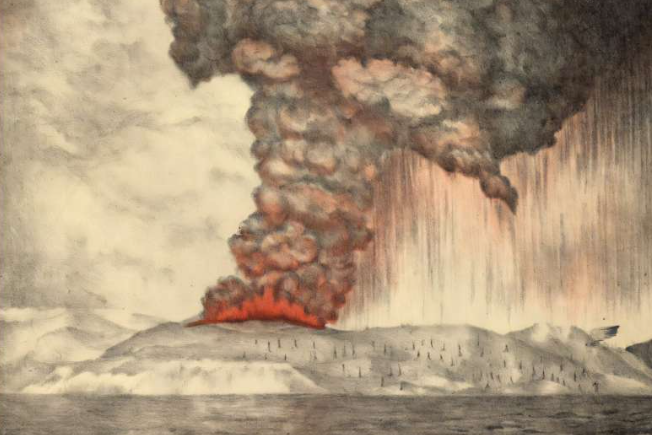
The 1883 eruption was one of the most powerful in recorded history. It triggered deadly tsunamis that killed about 35,000 people and sent volcanic material high into the atmosphere. The eruption also caused unusual effects around the world, including blue-looking moons, colourful sunsets and a drop in global temperatures.
Scientists believe the eruption was linked to magma rising from deep underground and mixing with magma already beneath the volcano. Krakatau’s location in the ocean made the eruption especially dangerous because volcanic material and the collapse of the volcano caused large tsunamis.
The eruption was also felt far beyond Indonesia. Tsunamis reached Australia and New Zealand, while pumice from the volcano travelled across the Indian Ocean. Volcanic ash and gases also affected the atmosphere for years.
Anak Krakatau remains active. In 2018, an eruption caused much of the volcano to collapse and triggered a tsunami that killed more than 400 people. Indonesian authorities say the volcano is currently not expected to collapse on a scale that would cause another major tsunami.
The main danger from the latest eruption is volcanic ash. The fine particles can harm people’s lungs and eyes and can damage aircraft engines, forcing airlines to cancel or delay flights.
Indonesia’s disaster agency has urged people to stay calm and follow information from government authorities.