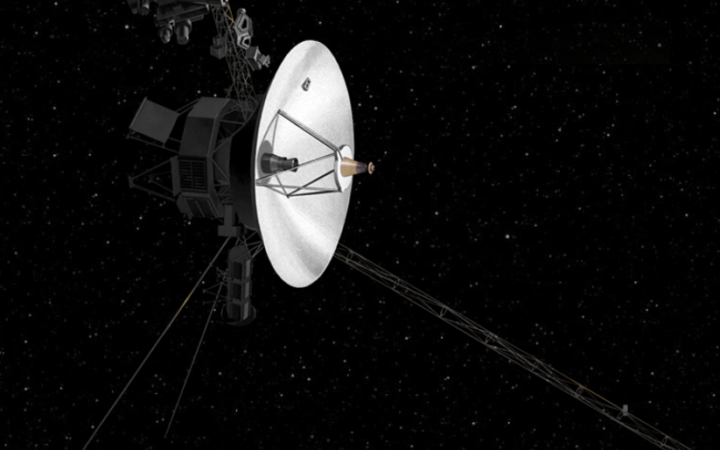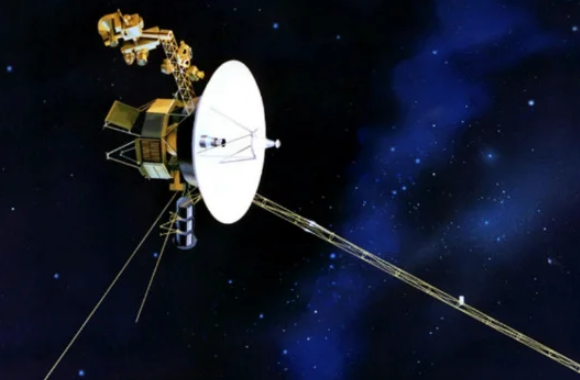
NASA’s Voyager 1 spacecraft is experiencing another technical problem just days after reaching a historic milestone, becoming the first human-made object to travel one light-day from Earth.
NASA detected the issue on Nov. 14, five days before the spacecraft reached the milestone. Voyager 1 is no longer sending science or engineering data to Earth and is transmitting only a continuous radio signal known as a carrier signal.
One light-day is the distance light travels in 24 hours, or about 16 billion miles (26 billion kilometres).
Although engineers confirmed Voyager 1 had reached the milestone using its signal and flight path, the latest problem has raised concerns about the future of the nearly 49-year-old spacecraft.
The carrier signal shows that Voyager 1 is still pointed toward Earth and its antenna and radio equipment are working. However, the loss of data suggests a possible problem with an onboard computer responsible for collecting information from its scientific instruments.
Only two of the spacecraft’s original 10 instruments are still operating. The others have been shut down to conserve power.
NASA engineers are working to fix the problem, but the spacecraft’s distance makes repairs difficult. A command takes about 24 hours to reach Voyager 1, and another 24 hours are needed for a response to return to Earth.
Repeated technical problems
The latest issue is similar to a problem Voyager 1 experienced in November 2023, when it also stopped sending science data.
At the time, engineers traced the problem to a computer system that collects and prepares information for transmission. A damaged computer chip caused the malfunction, forcing engineers to rewrite parts of the system’s software.
NASA has not confirmed whether the same computer is responsible for the current problem.
In late October, Voyager 1 also lost all communication with Earth for two days before the connection returned. NASA is investigating whether that incident is connected to the latest trouble.
Launched in September 1977, Voyager 1 was originally designed for a five-year mission to study Jupiter and Saturn. It has now operated for nearly 49 years, far longer than expected.
Its twin spacecraft, Voyager 2, launched in August 1977. Both probes have since travelled beyond the heliosphere, the protective bubble created by the Sun, and are now studying interstellar space.
Voyager 1 entered interstellar space in 2012, while Voyager 2 followed in 2018. Despite repeated technical problems, engineers continue to find ways to keep the historic spacecraft operating.