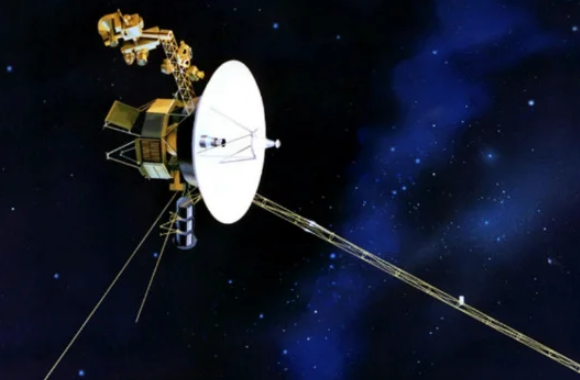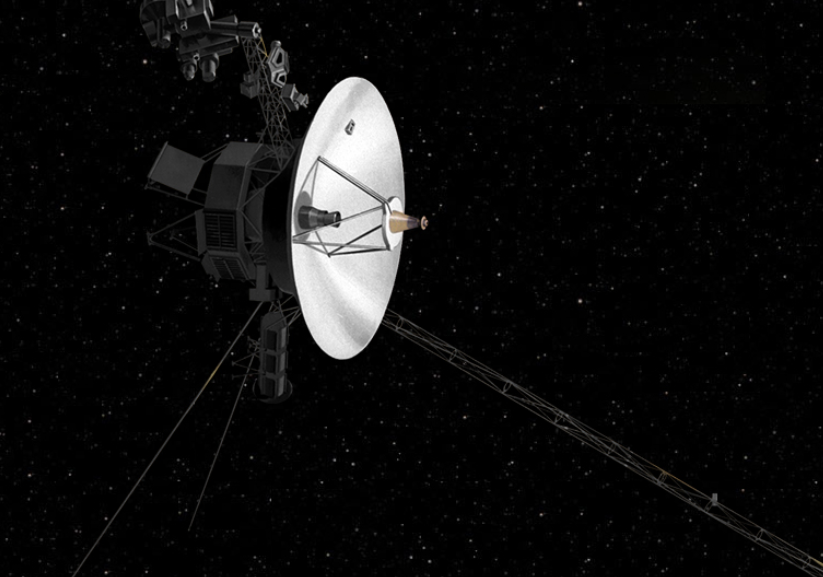
NASA’s Voyager 1 spacecraft is expected to make history on Wednesday by becoming the first human-made object to travel one light-day from Earth.
Launched in 1977, Voyager 1 will reach a distance of about 16 billion miles from Earth. One light-day is the distance light travels in 24 hours.
The spacecraft completed its flyby of Saturn in 1980 and is now travelling through interstellar space at about 36,000 miles per hour.
Powered by plutonium, Voyager 1 continues to send scientific data back to Earth, including information about magnetic fields, space dust and cosmic rays. NASA engineers still send commands to the spacecraft about once a week to keep it operating.
NASA expects Voyager 1 would need about 18,000 years to travel one light-year, with the nearest star still much farther away.
Its twin spacecraft, Voyager 2, is expected to reach the one light-day milestone in 2035.
Voyager 1 has also made a lasting mark on science and culture. In 1990, it captured the famous “Pale Blue Dot” image of Earth, showing how small our planet looks from deep space.
Both Voyager spacecraft remain active more than four decades after their launch, continuing to explore regions of space no other human-made objects have reached.