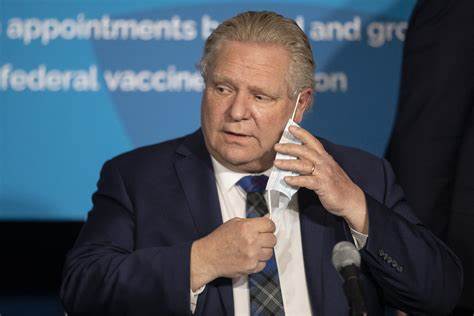
Ontario faces bigger deficit and drops climate targets as economy slows
Ontario’s finances are deep in the red — and the government is backing away from some of its environmental goals.
Finance Minister Peter Bethlenfalvy’s fall economic statement says the province will run a $13.5-billion deficit this year, up sharply from last year’s $1.1-billion shortfall. The new number is slightly better than the $14.6 billion deficit predicted in the spring budget.
Hidden near the end of the 199-page report is a proposal to remove a law that requires Ontario to set and report on climate change targets. This change follows Premier Doug Ford’s 2018 decision to pull Ontario out of a cap-and-trade program with Quebec and California.
Bethlenfalvy said Ontario’s economy is facing major challenges. The province is struggling with job losses, slower growth, fewer housing starts, and falling home prices. He blamed much of the trouble on U.S. President Donald Trump’s tariffs, which have hurt Ontario’s auto and steel industries.
To help, the government will triple the Ontario Together Trade Fund from $50 million to $150 million, helping small and medium-sized businesses find new markets. Ontario is also keeping a $5-billion support fund for companies affected by the trade war.
The government is also adding $1.1 billion over three years to home care programs so more seniors can live at home instead of in hospitals or long-term care.
Bethlenfalvy said Ontario will still work to cut emissions, but critics disagree. Green Party Leader Mike Schreiner said removing the legal requirement for climate targets is “abandoning the plan to fight climate change.” The auditor general also warned last month that Ontario is falling even further behind its 2030 emissions goals.
Opposition leaders said the update does little to help struggling families. NDP Leader Marit Stiles said many young people can’t find work, while Liberal MPP Stephanie Bowman pointed out that unemployment has risen for nine straight quarters.
Since Ford’s government took power in 2018, Ontario’s debt has grown by 35.8 per cent — from $337.5 billion to a projected $458.6 billion next year. Interest payments now total $16.2 billion a year, more than most ministries spend.
Ontario’s economic growth is expected to slow to 0.8 per cent this year and 0.9 per cent next year. Unemployment will rise to 7.8 per cent, up from 7 per cent in 2024.
The housing outlook is also bleak. Only 64,300 new homes are expected this year — far below the pace needed to meet the government’s goal of 1.5 million homes by 2031. The province plans to waive its 8 per cent HST for first-time buyers of homes under $1 million to boost building and buying.
Home resale prices are expected to fall 3.3 per cent this year, but rebound slightly in 2026.
Although the statement mentioned Ford’s plan for a Highway 401 tunnel from Mississauga to Scarborough, no cost estimates were provided.