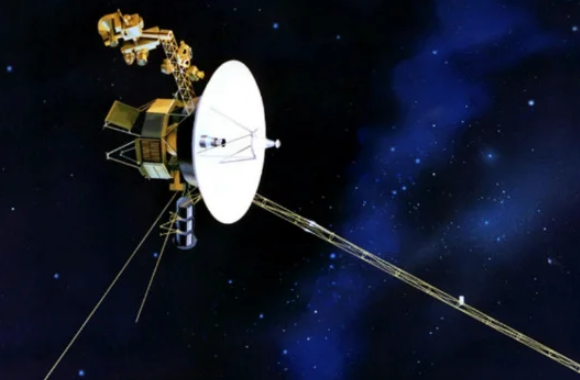
NASA’s Voyager 1 spacecraft is approaching a historic milestone, but engineers are investigating a recent communication problem that briefly left the probe out of contact with Earth.
Launched in 1977, Voyager 1 is expected to become the first human-made object to travel one light-day from Earth on November 18. It is currently about 16 billion miles (26 billion kilometres) away.
NASA lost contact with the spacecraft on October 18 and 19 after two attempts to detect its radio signal failed. Communication was restored on October 20, but engineers are still investigating the cause.
NASA discovered that one group of the spacecraft’s thrusters had stopped working during the outage. Backup thrusters automatically activated to keep the probe stable.
Engineers are also working to extend Voyager 1’s lifespan by reducing its power use. A recent upgrade, called the “big bang,” shut down three devices and replaced them with lower-power alternatives.
The spacecraft is powered by heat from decaying plutonium and loses about four watts of electricity each year.
Once Voyager 1 reaches one light-day from Earth, radio messages will take 24 hours to reach it and another 24 hours for a response to return.
Despite its age, Voyager 1 continues to collect valuable information about interstellar space, nearly 50 years after its launch.