Environment and Climate Change Canada (ECCC) is introducing a new colour-coded weather alert system, the department announced in a press release.
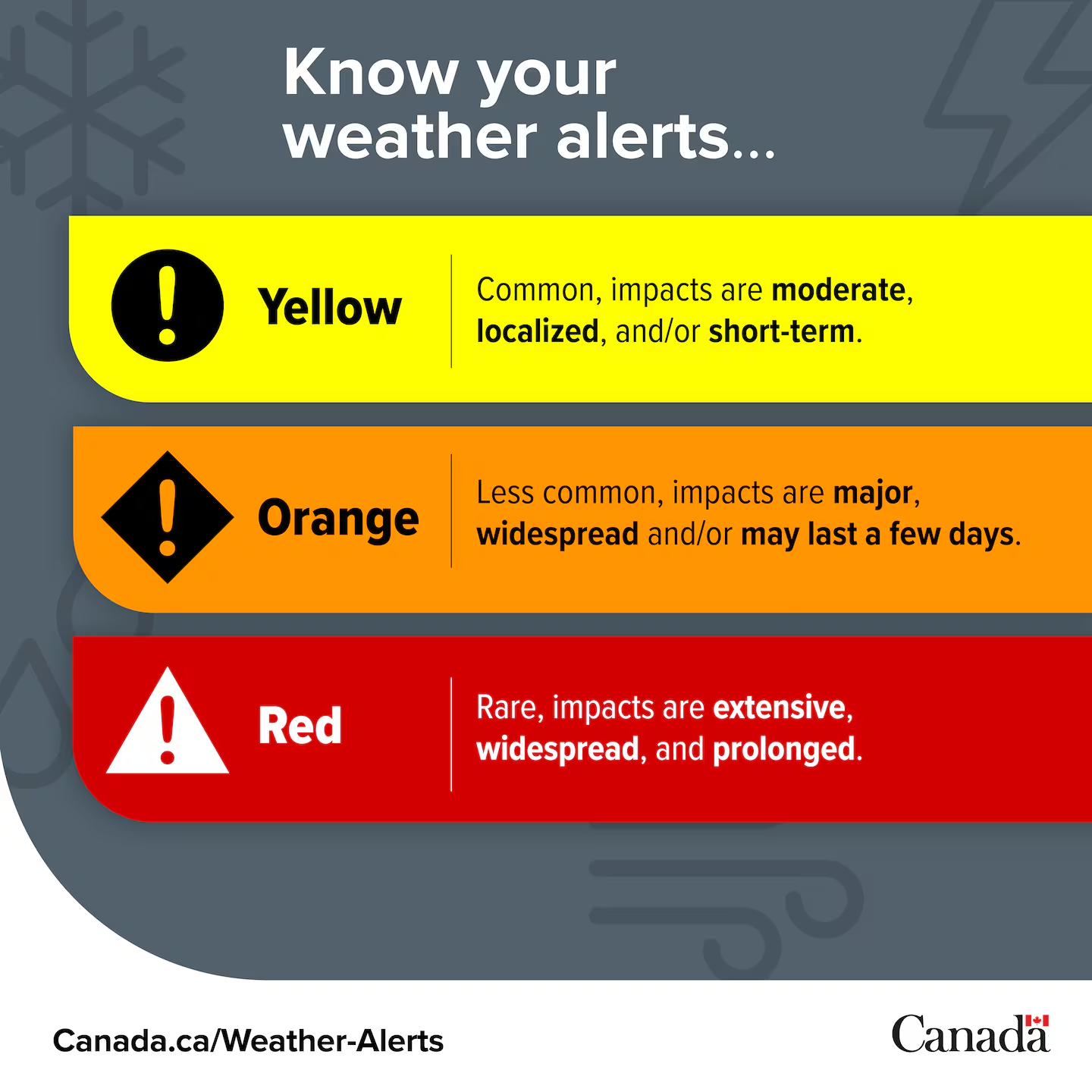
Instead of only naming the type of hazard, alerts will now include one of three colour levels:
-
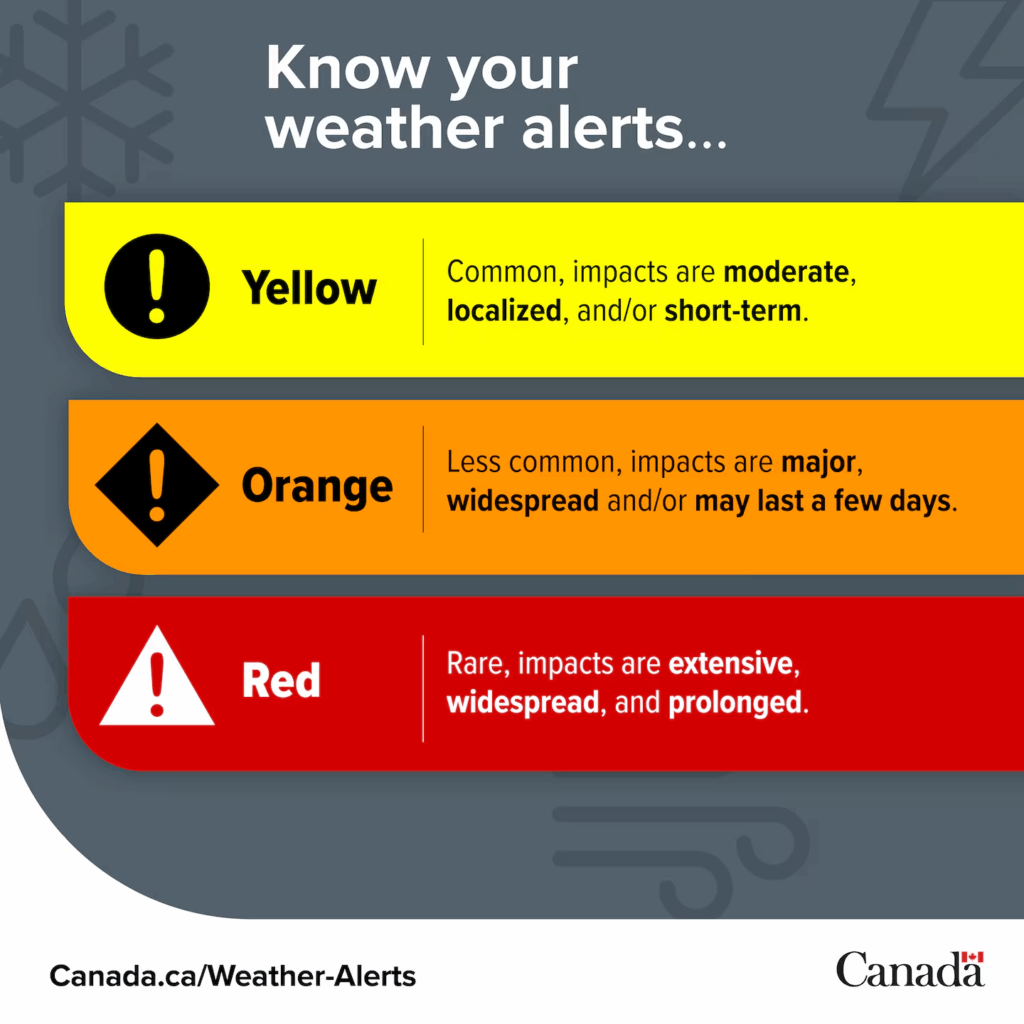
Yellow: Hazardous weather may cause some damage, disruption, or health impacts
-
Orange: Severe weather is likely to cause significant damage, disruption, or health impacts
-
Red: Very dangerous or life-threatening weather will cause extreme damage and disruption
Environment Minister Julie Dabrusin said Canadians are experiencing more frequent and extreme weather, making clear and easy-to-understand alerts more important than ever. She said the updated system will help people prepare for risks and make informed choices to protect themselves and their property.
Jesse Wagar, a warning preparedness meteorologist with ECCC, said the new system is meant to modernize how Canada issues weather warnings. She explained that it includes the confidence level of meteorologists in their forecasts, helping people plan ahead.
The system also shifts from “threshold-based” forecasting to “impact-based” forecasting. Threshold-based forecasting uses fixed cutoffs, like a certain amount of snow in a few hours. Impact-based forecasting looks instead at how weather is expected to affect people, infrastructure, and communities. Wagar said the new approach follows recommendations from the World Meteorological Organization and includes input from many partners across the country.
She added that ECCC will consider local infrastructure risks when creating alerts, but people should still check for updates from local agencies.
Some experts say colour-coded systems help people quickly understand the seriousness of a weather event. For example, yellow during freezing rain might mean taking basic precautions, like salting sidewalks and preparing for possible power outages. Red would signal a much more dangerous situation, similar to major ice storms in the past.
Wagar noted that it will take time for Canadians to adjust to the new system, but hopes it will give people a quick and clear sense of how severe a weather event could be, rather than just a simple “warning” or “no warning.”
Meanwhile, forecasters say this winter could be colder and stormier than recent years. A polar vortex above the Arctic is expected to weaken, sending cold air south into Canada in December and January. A weak La Niña pattern may also contribute to more cold and stormy weather across the country.
Experts hope the new alert system will help Canadians prepare for the challenging winter ahead.