Canada to End Tariffs on U.S. Goods Covered by CUSMA by Sept. 1
Prime Minister Mark Carney announced Friday that Canada will remove all tariffs on American goods that fall under the Canada-U.S.-Mexico Agreement (CUSMA) by September 1.
Carney said Canada will still keep tariffs on steel, aluminum, and cars while talks with the U.S. continue to build a new trade relationship. He noted that even though the U.S. still has tariffs on Canadian steel, aluminum, cars, copper, lumber, and energy, about 85% of trade between the two countries remains tariff-free.
“As we work to solve trade disputes with the U.S., we must protect this advantage for Canadian workers and families,” Carney said.
U.S. President Donald Trump praised Carney after the announcement, saying they had a good conversation in Washington.
Earlier this month, Carney suggested he might ease tariffs to help Canadian industries during the trade war. This comes after Trump raised tariffs on some Canadian products to 35% on July 31, blaming fentanyl trafficking and Canada’s past counter-tariffs.
Since the trade war began, Canada has hit U.S. goods with tariffs three times, including $60 billion worth of consumer products and extra tariffs on autos, steel, and aluminum. The new U.S. tariff rate does not apply to goods covered by CUSMA.
Carney said removing these tariffs should make trade talks with the U.S. “more serious” and help prepare for the official CUSMA review next year. Ottawa will also start consulting industries soon to set Canada’s priorities for that review.
The government is also planning major “nation-building” projects, such as highways, ports, airports, pipelines, and power lines, and will soon announce the first one.
Reactions from political leaders and groups
Conservative Leader Pierre Poilievre slammed Carney’s move, saying it gives up too much without getting results. “This is another climb-down by Mark Carney,” Poilievre said. “He needs to admit he was wrong or lied about getting the best deal with Trump.”
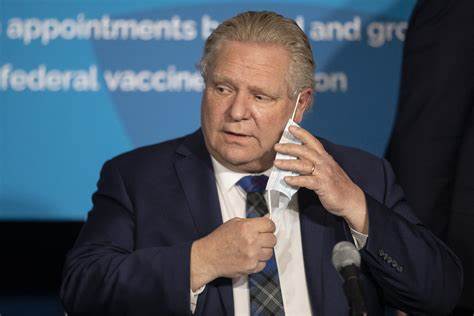
Ontario Premier Doug Ford urged the federal government to push harder for relief in steel, auto, forestry, and copper industries.
The Canadian Federation of Independent Business welcomed the change, saying it will ease pressure on small businesses, though many have already paid millions in tariffs. They urged the government to return some of that money.
Unifor, Canada’s largest private-sector union, opposed the move. President Lana Payne said dropping tariffs “isn’t an olive branch” but instead gives up leverage against U.S. aggression.